

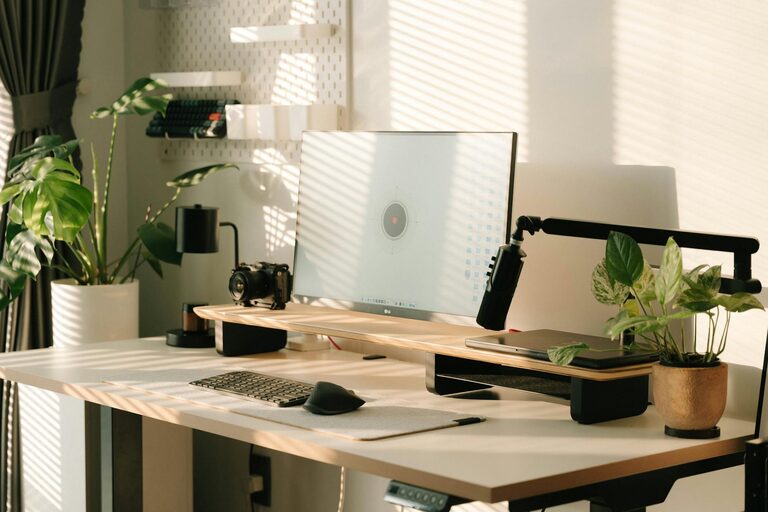
Working from home has become a common part of many people’s daily routine. A comfortable and well-organised home office can make a significant difference in your productivity and overall work satisfaction. Whether you have a dedicated room or just a small corner, creating a space that supports your work needs is key. Here are some helpful tips to design a home office that blends comfort with efficiency.
Choose the Right Location
Pick a Quiet Spot
Selecting a quiet area in your home helps you focus without distractions. Ideally, find a room or corner away from high-traffic areas like the kitchen or living room. If this isn’t possible, consider using noise-cancelling headphones or white noise machines to reduce background noise.
Consider Natural Light
Placing your desk near a window can provide natural light, which contributes to better mood and alertness. However, avoid direct glare on your screen by positioning your monitor perpendicular to the window. If natural light isn’t an option, invest in good quality artificial lighting.
Invest in Comfortable Furniture
Ergonomic Chair and Desk
An adjustable ergonomic chair that supports your lower back is vital for maintaining good posture throughout the day. Pair it with a desk at the correct height to keep your arms at a comfortable angle when typing or writing.
Desk Organisation
Choose a desk with enough surface area to hold your essentials – computer, notepad, and any reference materials – without feeling cluttered. Consider desks with built-in storage or add separate organisers to keep supplies tidy.
Optimise Your Technology Setup
Reliable Equipment
Ensure your computer, internet connection, and other devices meet your work requirements. Slow or outdated technology can cause frustration and decrease efficiency.
Cable Management
Use clips, sleeves, or boxes to organise cables and prevent tangles. A neat setup reduces visual distractions and makes cleaning easier.
Create a Productive Atmosphere
Personalise Thoughtfully
Add items that inspire motivation, such as plants, photos, or artwork, but avoid overcrowding your space which can lead to distraction.
Keep It Tidy
Develop a daily habit of clearing your desk and filing documents properly. A clutter-free desk helps maintain focus and reduces stress.
Manage Lighting and Screen Glare
Use Adjustable Lighting
Desk lamps with adjustable brightness and colour temperature allow you to match lighting to the time of day and task at hand, reducing eye strain.
Position Screens Carefully
Place your monitor so it avoids reflections and glare from windows or lights. Using an anti-glare screen protector can also help.
Incorporate Break and Movement Areas
Schedule Regular Breaks
Set reminders to stand up, stretch or move around every hour. Moving throughout the day improves circulation and reduces fatigue.
Create a Stretching Space
If possible, keep a clear area for quick exercises or stretches. Some light movement helps refresh your mind and body.
Maintain Good Air Quality
Ventilation
Keep your home office well ventilated by opening windows when possible or using an air purifier. Good airflow helps keep you alert and reduces the buildup of indoor pollutants.
Add Plants
Indoor plants not only brighten the space but can improve air quality as well. Choose low-maintenance varieties such as snake plants or pothos.
Set Boundaries Between Work and Relaxation
Define Work Hours
Establish specific working times to help maintain a healthy work-life balance.
Separate Work Zone
If your workspace is part of a multi-use room, use screens, rugs, or furniture placement to visually separate the office area from rest spaces.
Conclusion
Creating a home office that is both comfortable and productive takes thoughtful planning but it pays off by making workdays more pleasant and efficient. Focus on choosing the right location, investing in ergonomic furniture, managing lighting, and keeping the space organised. Remember to personalise thoughtfully and balance work with regular movement and fresh air. With these tips, your home office can become a space that supports your professional success and wellbeing.